Sell Your Tampa Business for Maximum Value — Completely Confidentially.
Receive a precise, market-based business valuation from a Board Certified Intermediary with over 30 years of local exit experience.
Achieve a swift, confidential sale with professional support through every phase of the transaction—from listing to closing.

Free Comparable Sold Business Report via email.
Would it be helpful for you to see what other Businesses like your have actually sold for? The Free Report has Sold Business for sale listings similar to your Sales and Business Type. More Info

Florida Businesses for Sale.

Medical Healthcare Comparable Sold Business Report Sent to your email.
Medical Clinics, including Pediatrics, Internal Medicine, Cosmetic, Aesthetic, HRT Clinics, Allergy and Immunology, Weight loss, Family Medicine, Physical Therapy, Laser and Medical Research Clinics. We also specialize in Home Healthcare Agencies, Nurse Registries, Senior Care Businesses, ALF's, Adult Day Care, Med Spas, Chiropractic Clinics.
Frequently asked Questions & Answers about Business Brokerage, From Buyers and Sellers.
-
Success fee (commission) from 6% to 10% of sales price (scales down above $1mm. The Real Estate Portion 6%. Most brokers have minimum fees from $10k to $15k.
-
Main Street Businesses (<$2M): On average, it takes 6 to 12 months to sell a small business. The process moves through three key phases:
Valuation & Setup (2–4 Weeks): Recasting financials and building marketing materials.
Marketing & Vetting (3–6 Months): Securely finding and screening potential buyers.
Due Diligence & Closing (60–90 Days): Legal drafting, financing approvals (like SBA loans), and final settlement.
-
Brokers enforce absolute confidentiality through a three-layer protocol:
Blind Listings: Marketing materials use generic terms (e.g., "Profitable HVAC Business in Tampa Bay") without revealing names or exact locations.
Mandatory NDAs: No identifying details or financial files are released until a buyer signs a legally binding Non-Disclosure Agreement and passes financial screening.
Off-Site Communication: All calls and document shares are routed outside your daily business operations.
-
For Owner Operated Businesses , Brokers primarily use the Direct Market Data Method (DMDM)—also known as the Market Comparable Approach—which values a business by comparing it to recent local sales of similar companies.
The Baseline Formula:
Business Value = Discretionary Earnings (SDE) X Market MultipleSDE Explained: The financial benchmark representing true cash flow, calculated by adding back the owner's salary, personal perks, and one-time expenses to the net income.
The Multiple: An industry-specific and Business Size benchmark for Main Street businesses) pulled from transactional databases like the Business Brokers of Florida and Business Value Resources. Final Adjustments: The raw value is fine-tuned based on specific risk factors, the business's ability to provide the buyer with a living wage, and its Debt Service Coverage Ratio (ability to cover loan payments).
Why the Market Approach Works Best
Reflects Real Buyer Behavior: Small business buyers usually want to “buy a lifestyle, control their destiny and build a legacy.
Perfect alignment with SDE: comparing SDE directly against database comps ensures an accurate "apples-to-apples" match.
Helps Secures Bank Financing: SBA.
-
SDE (Seller’s Discretionary Earnings).What does full time working owner make, Including their Labor.
Owner Works at Business Full time
EBITDA tells an investor how much money the business makes absentee, after paying team to run it.
Absentee Run Business with hired help to run business.
-
The largest website for advertising businesses for sale has 60k listings and <10k sold per year.. Only 17% Sold on this platform. 83% of Business for sale listings DO NOT SELL.
The more experienced the Business Broker is, the higher the closing ratio.
My closing ratio has been 85% for the last 20+ years.
-
Both the business and commercial real estate must be valued separately to maximize your total exit value. We use a strategic 3-step formula to unlock full asset equity:
1. Calculate Baseline SDE: Determine true Seller’s Discretionary Earnings to establish operational business cash flow.
2. Deduct Fair Market Rent: Subtract market rent from SDE to cleanly separate business earnings from real estate equity.
3. Capitalize Property Value: Divide that fair market rent by the local cap rate to establish independent property value.
The Combined Total: Adding standalone business value to capitalized real estate value calculates a data-backed package price that protects every dollar of your hard work.
-
Business Brokers: Focus on local, owner-operated "Main Street" small businesses typically generating under $5M in value (without Real Estate).
M&A Advisors: Handle middle-market corporate transactions involving larger entities, strategic buyers, family offices, or private equity roll-ups.
Business Brokers overlap with M&A in what’s referred to Upper Main Street and Lower Middle Market. This is due to Private Equity Groups doing Roll ups, and seeking back office synergies.
-
To protect your time, brokers vet prospects before sharing sensitive information by verifying:
Minimum liquid capital and total net worth.
Direct operational background and industry competency.
A signed, active NDA.
-
These cost are Broker-Absorbed Overhead: Under a standard exclusive listing agreement, the broker covers all marketing and distribution costs across premium networks and targeted marketing. These costs are recovered via their commission at closing.
-
Yes. Reputable intermediaries require an Exclusive Right to Sell agreement (typically lasting 6 to 12 months). This protects their upfront investment in valuations and marketing. It usually includes a 12 to 24-month tail clause to ensure the broker is paid if an introduced buyer purchases the business after the contract expires.
-
To generate a reliable business valuation, you must provide a standard financial package:
3 years of federal business tax returns.
Current Year-to-Date (YTD) Profit & Loss (P&L) statement.
A matching Balance Sheet corresponding to the YTD P&L.
An FF&E List detailing tangible assets (Furniture, Fixtures, and Equipment).
Vincenzo LoCricchio has Personally & Confidentiality
Sold Hundreds of Businesses
$40,000,000.00+ Volume
30+ years Business Brokerage
M&A, Franchise Sales & Resales
Based in Tampa Bay Florida



📈 2026 Tampa Bay Small Business Economic Outlook
The Tampa Bay region has transitioned from post-pandemic inflationary volatility into a period of high-velocity, sustainable growth. With interest rates stabilizing and regional wealth continuously flowing into the market, pent-up demand is unlocking significant liquidity for local business owners.Whether you are evaluating an expansion or planning a confidential exit, here are the sectors and geographical corridors driving the market this year:
🚀 High-Upside Small Business Sectors
Healthcare & Medical Practices: Driven by an aging regional demographic and a steady influx of affluent retirees, healthcare remains a highly resilient, high-demand sector. Small business opportunities are surging for specialized medical practices, physical therapy clinics, and home healthcare agencies.Specialized Construction & Trade Services: Massive commercial and residential infrastructure projects continue to fuel a permanent trickle-down effect for local subcontractors. High-upside fields include HVAC, electrical, plumbing, cabinetry manufacturing, and professional landscaping/sod services.Financial & B2B Technology: Tampa Bay has secured a competitive, early-mover advantage in operational agility. According to regional economic data compiled by the Tampa Bay Chamber, the area ranks third among its national peer regions for Artificial Intelligence (AI) adoption, with nearly 13% of local businesses actively utilizing AI tools to streamline operations.
🛣️ Booming Geographic Corridors & Main Roads
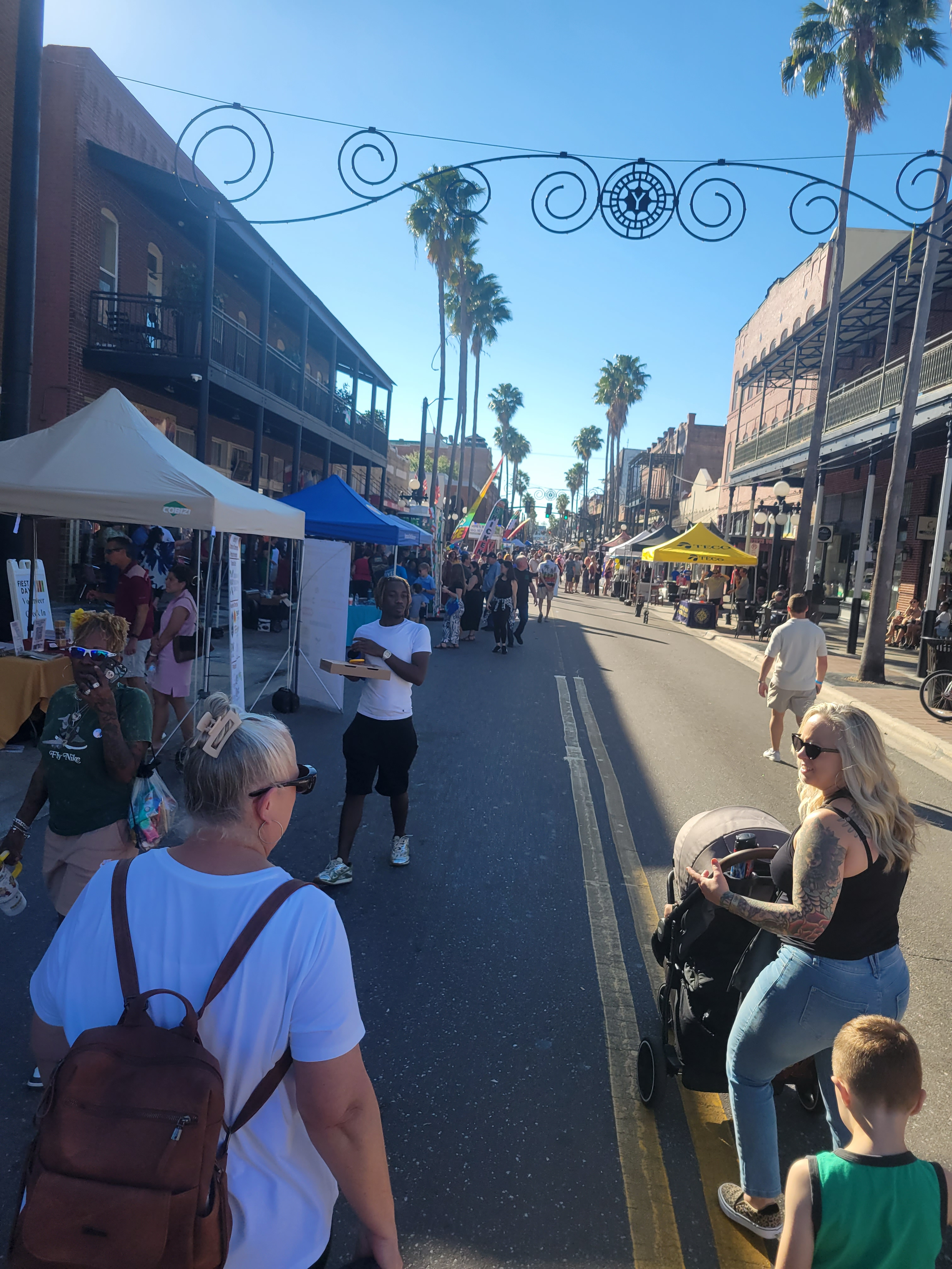
Growth is heavily concentrated along key highway veins stretching across Hillsborough, Pasco, and Pinellas counties, making these prime locations for business acquisition and expansion:The I-75 Northerly Corridor (Wesley Chapel / Zephyrhills / New Tampa): * The Main Roads:Interstate 75, State Road 56, State Road 54, and US-301.The Boom Factor: This remains the region’s premier hotspot for residential-to-commercial consumer demand. Ongoing master-planned housing developments in Pasco County have turned State Road 54 and 56 into the primary commercial spines for new medical practices, retail, and consumer service brands.The Urban Connectors (Downtown Tampa / Ybor City / Tampa Heights): * The Main Roads:The Selmon Expressway, the I-4 Junction, and N. Florida Avenue.The Boom Factor: Massive urban core megaprojects are rewriting local demographics. The continuous expansion of Water Street Tampa and the 15-block GasWorx development (strategically connecting Ybor City to Downtown and Channelside) are creating dense, walkable environments ideal for premium dining, boutique retail, and creative B2B agencies.The Westshore Business District & Airport Gateway: * The Main Roads:I-275, Kennedy Blvd (SR 60), and the newly completed Howard Frankland Bridge expansion.The Boom Factor: As Florida’s largest concentrated office market, Westshore continues to benefit from corporate relocations, offering unparalleled logistical infrastructure for B2B service firms, executive consulting, and logistics businesses.Downtown St. Petersburg (The SunRunner Corridor): * The Main Roads:I-275, 1st Avenue North/South, and Central Avenue.The Boom Factor: Rapid vertical multifamily infill development along the Central Avenue transit corridor has created a highly concentrated, hyper-local customer base for independent retail and tech-adjacent business concepts.
💡 The 2026 Strategic Takeaway
Data from local economic updates shows that Tampa Bay area wages have climbed 5.1% year-over-year, comfortably outpacing the national U.S. average of 3.8%. While a slight uptick in local unemployment to the low-4% range gives employers slight breathing room in hiring, rising commercial rents mean space is premium.
With regional wealth driving consumer demand, 2026 is an optimal market environment to clean up your balance sheet, optimize operations, and prepare your business for a high-value, premium exit.